
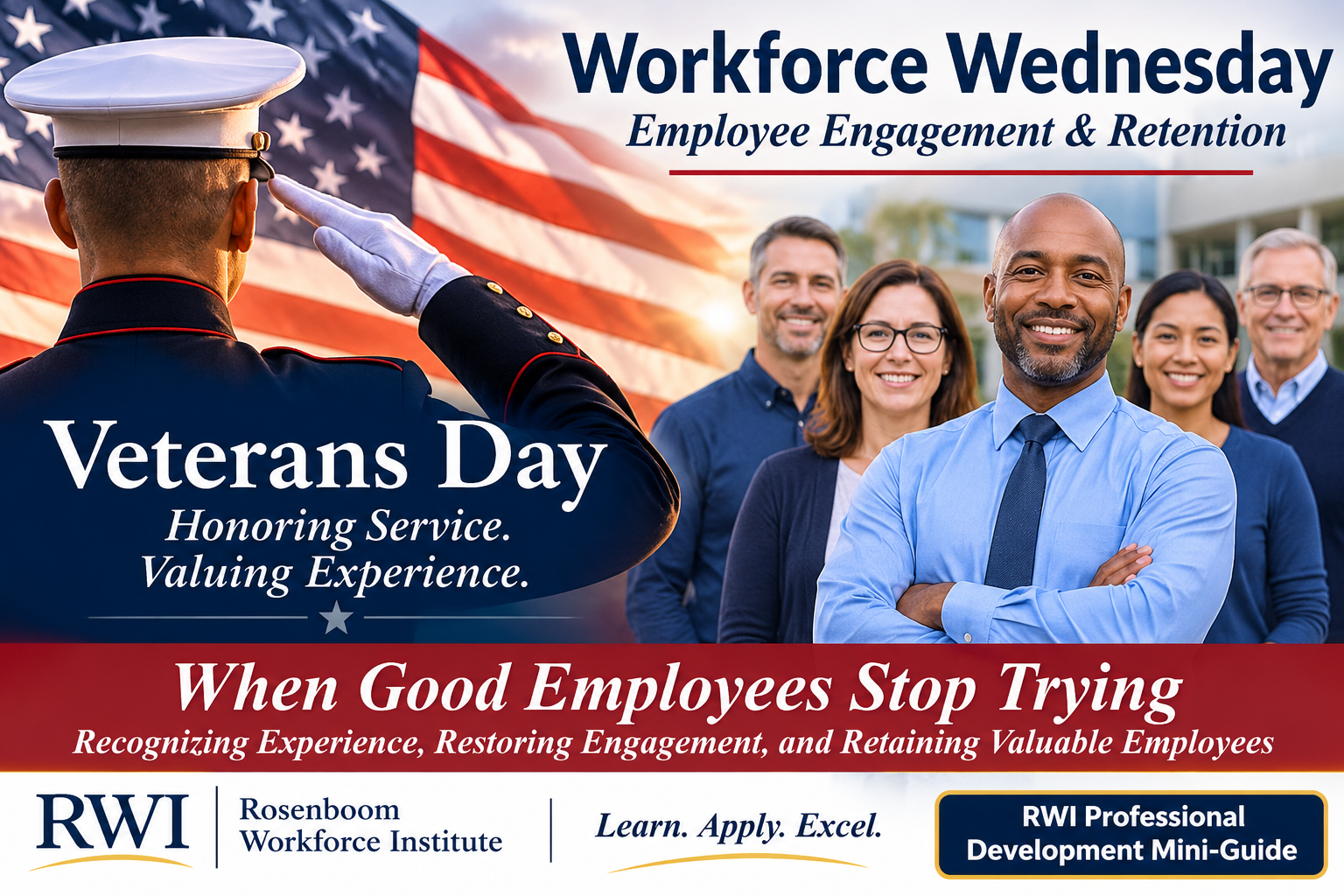
Workforce Wednesday | Veterans DayWhen Experience Goes Unrecognized: Five Ways Leaders Can Turn Employee Capabilities Into Organizational Strength
This Veterans Day, Workforce Wednesday explores an important question: What happens when organizations fail to recognize the experience and capabilities their employees bring to work? In this inaugural RWI Professional Development Mini-Guide, discover five practical ways leaders can recognize untapped talent, restore employee engagement, and strengthen retention. Because honoring experience means more than acknowledging it—it means creating opportunities for people to contribute, grow, and make a difference.
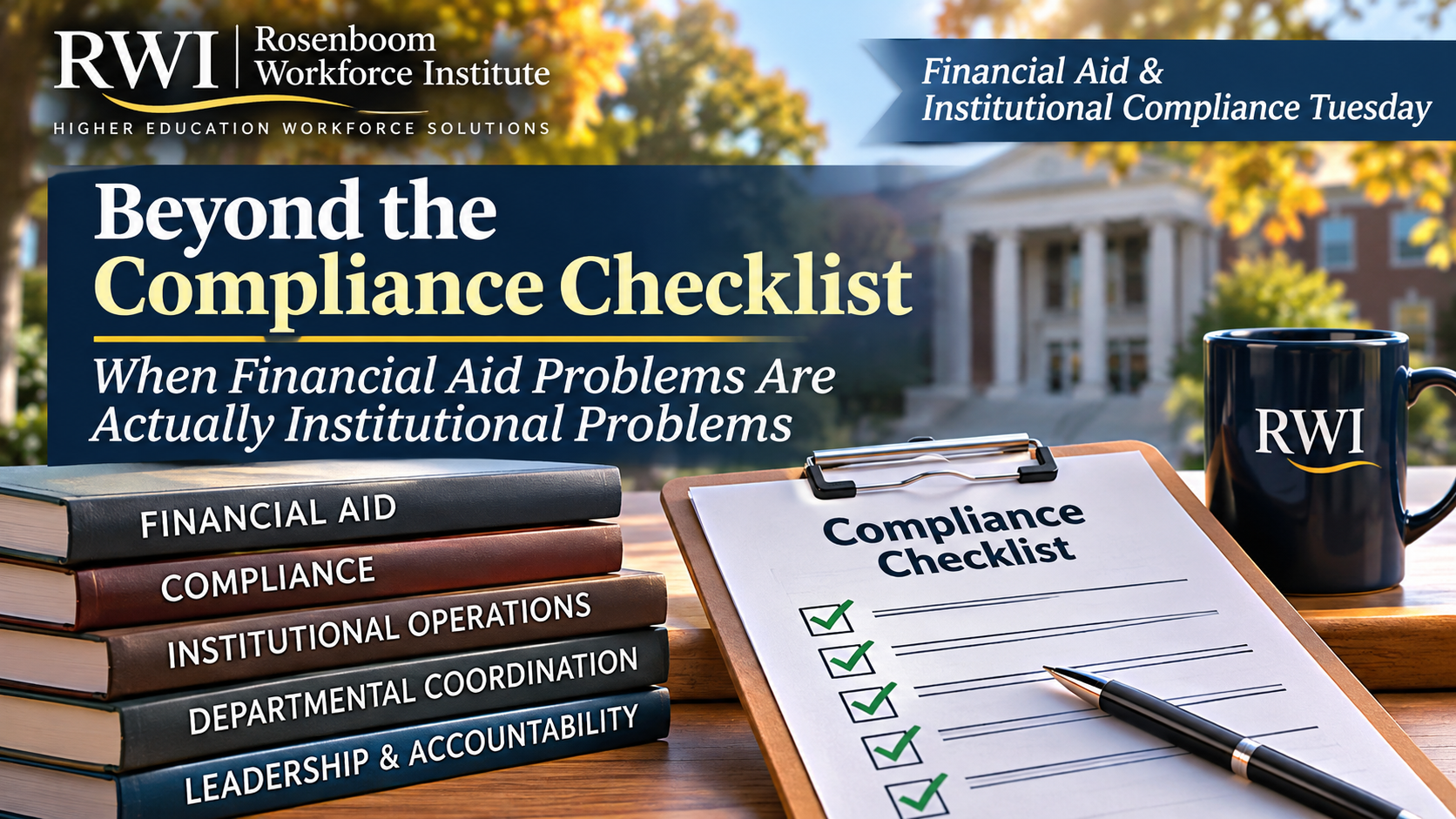
Beyond the Compliance Checklist: When Financial Aid Problems Are Actually Institutional Problems
Financial Aid compliance problems don't always begin in the Financial Aid Office. From departmental communication breakdowns and staffing shortages to inconsistent procedures and unclear leadership accountability, institutional decisions can create significant Title IV compliance risks. Explore why effective compliance requires more than checklists—and why institutional coordination, employee support, and shared responsibility are essential to protecting students and strengthening higher education operations.
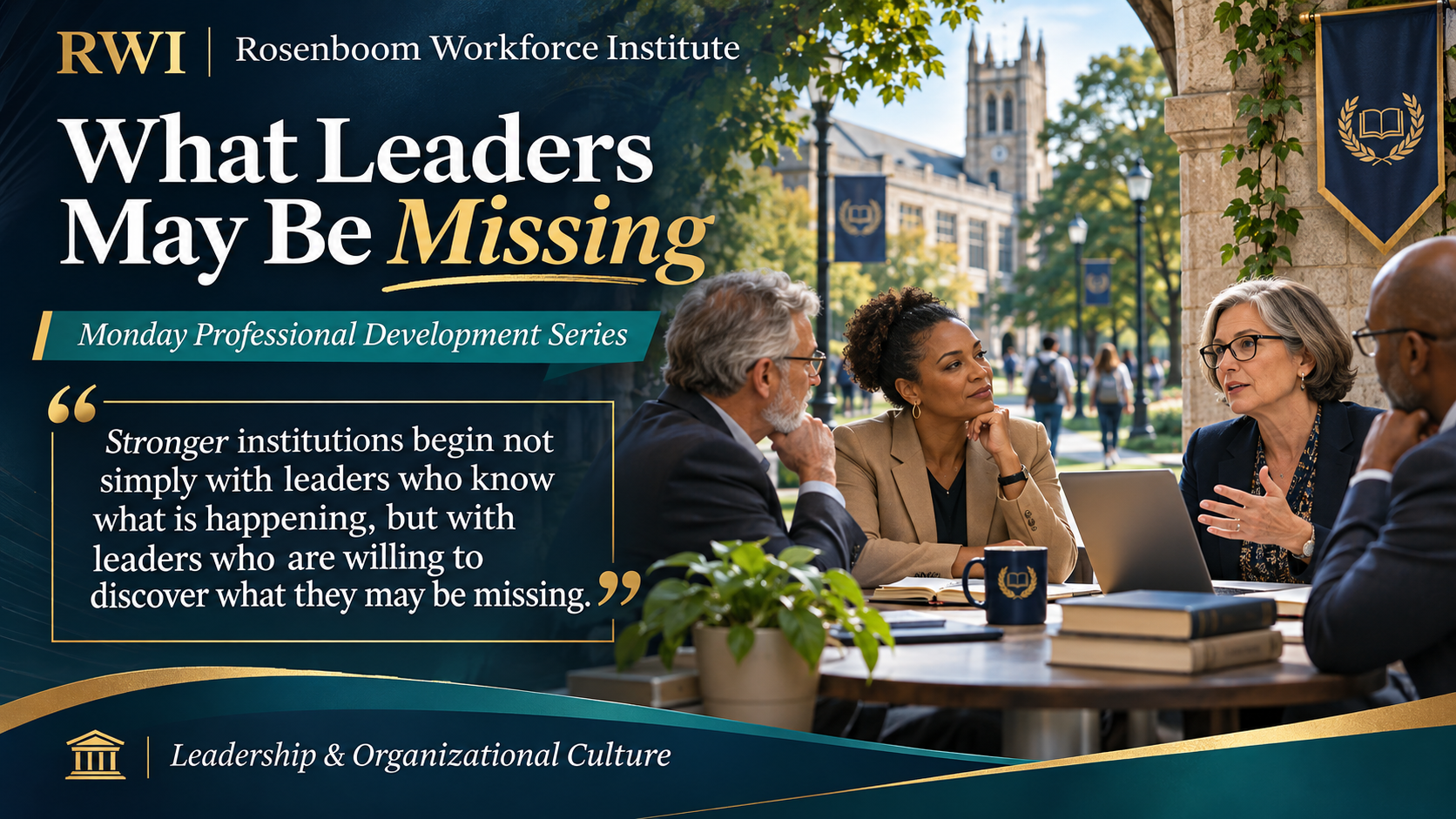
What Leaders May Be Missing: The Everyday Experiences That Shape Institutional Culture
What might higher education leaders be missing about the everyday experiences of their employees? Explore how leadership practices, employee trust, recognition, accountability, and organizational culture influence institutional effectiveness. Discover seven important questions that encourage leaders to look beyond performance measures and better understand the people responsible for institutional success.
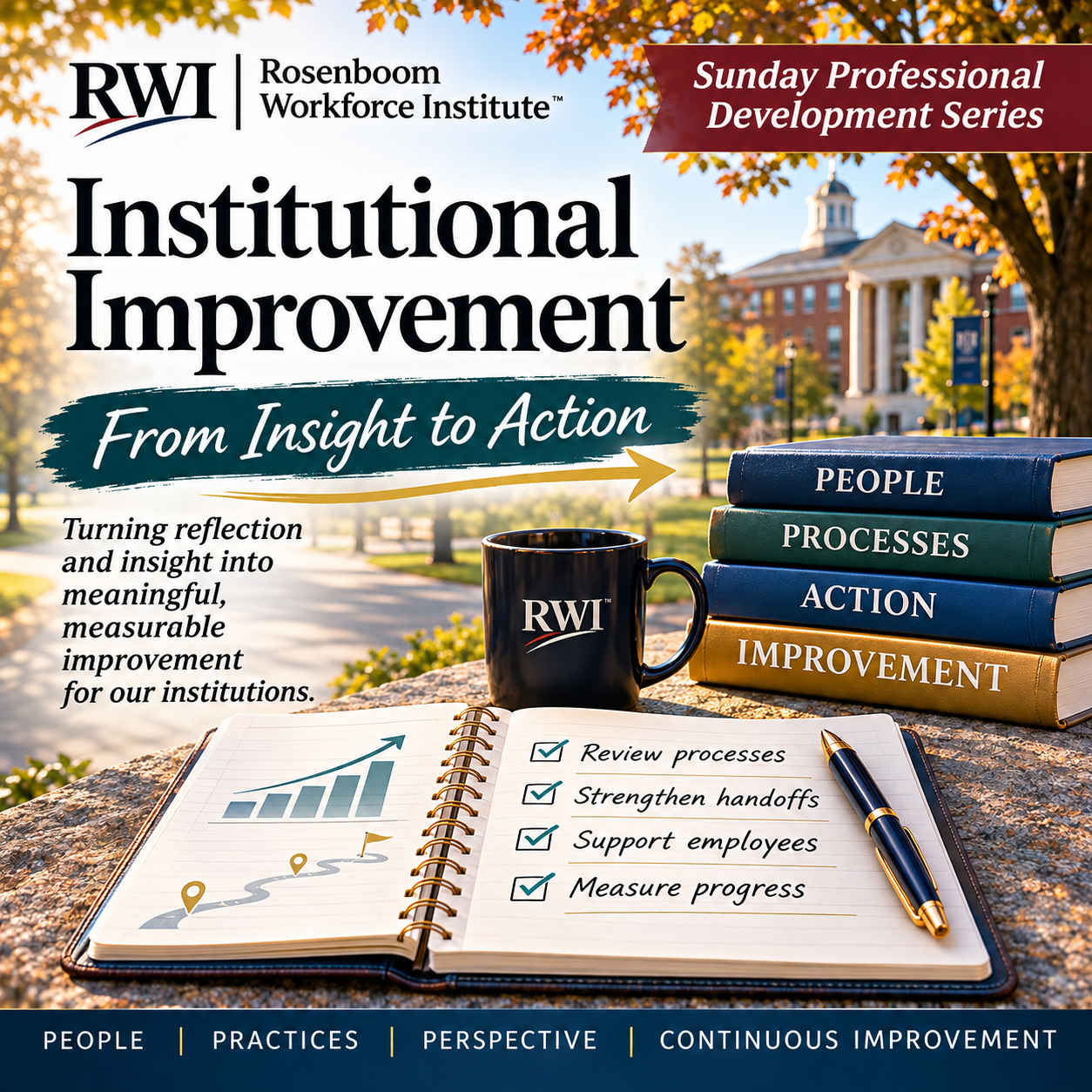
From Insight to Action: Institutional Improvement Begins With What We Do Next
Institutional improvement begins with insight, but meaningful change requires action. Explore how higher education leaders can turn employee feedback, operational challenges, and institutional reflection into practical, measurable improvements that strengthen collaboration, support employees, and enhance the student experience.
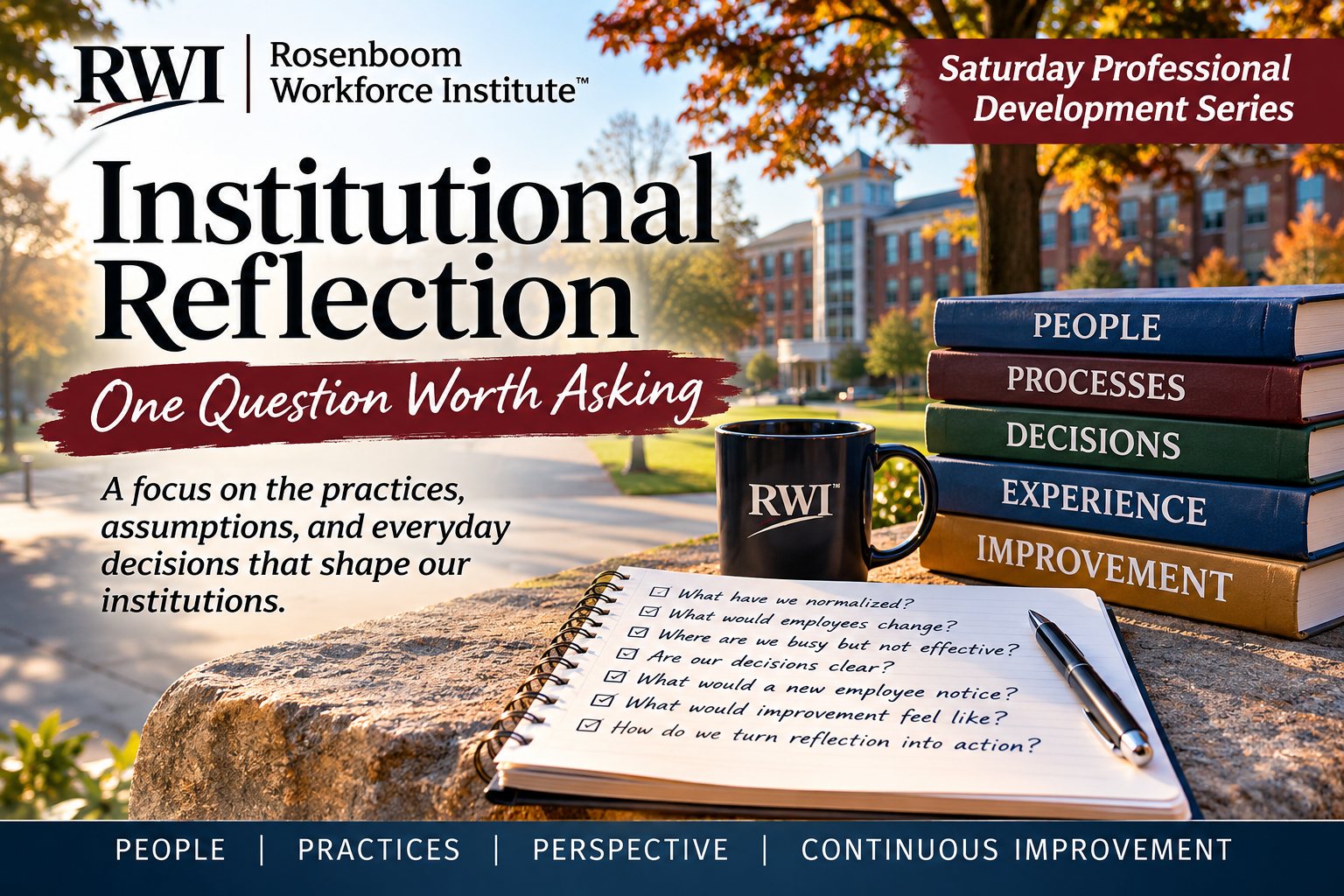
Institutional Reflection: One Question Worth Asking
Institutional improvement begins with asking questions we may have stopped asking. This week's Rosenboom Workforce Institute reflection explores the everyday practices, assumptions, and decisions that shape employee experiences, institutional effectiveness, and student success. Sometimes the most meaningful change begins with one question worth asking.
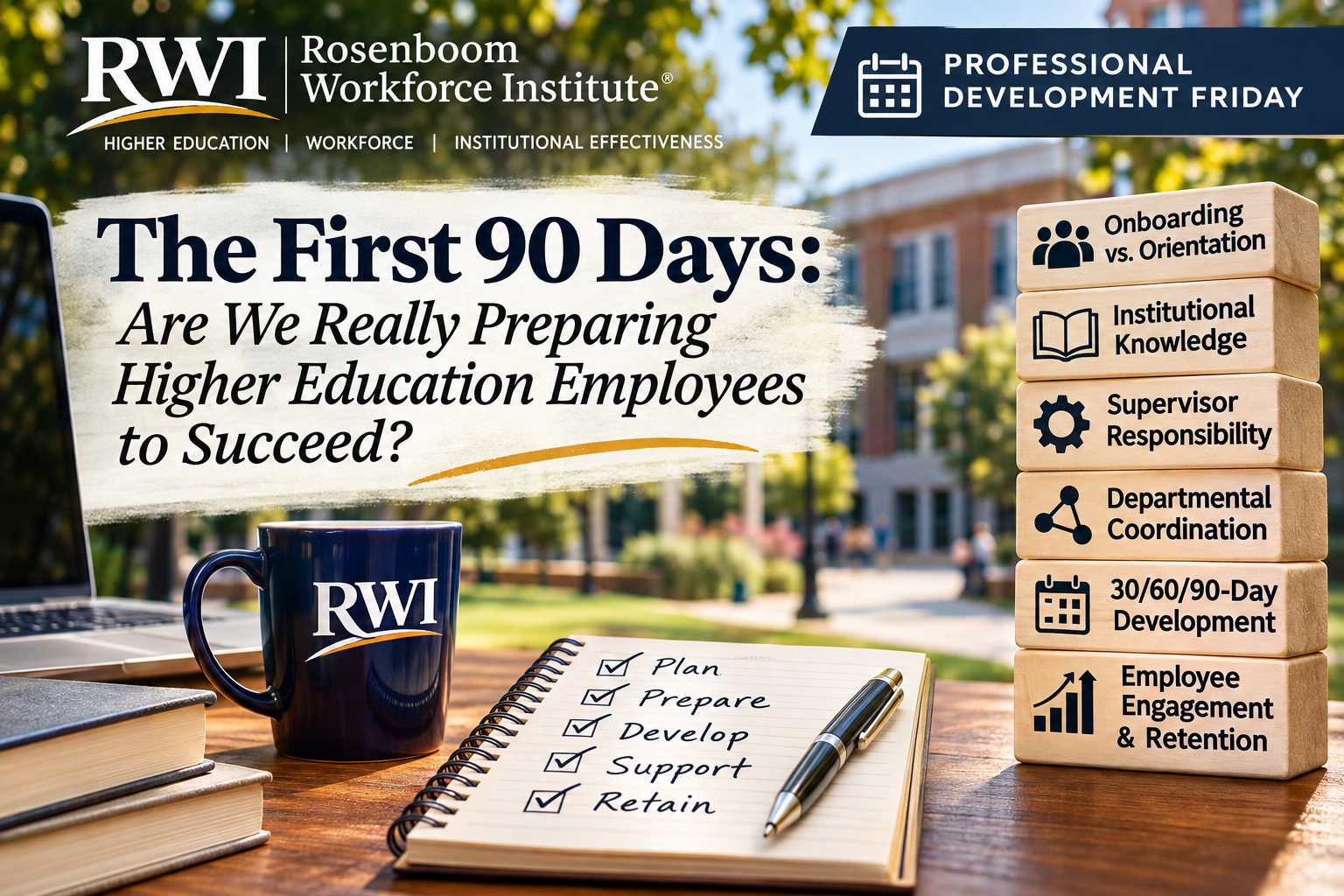
The First 90 Days: Are We Really Preparing Higher Education Employees to Succeed?
Higher education institutions invest heavily in recruiting employees, but do they invest equally in preparing them to succeed? Explore how effective onboarding, supervisory support, institutional knowledge, and cross-departmental understanding can strengthen employee development and the student experience.
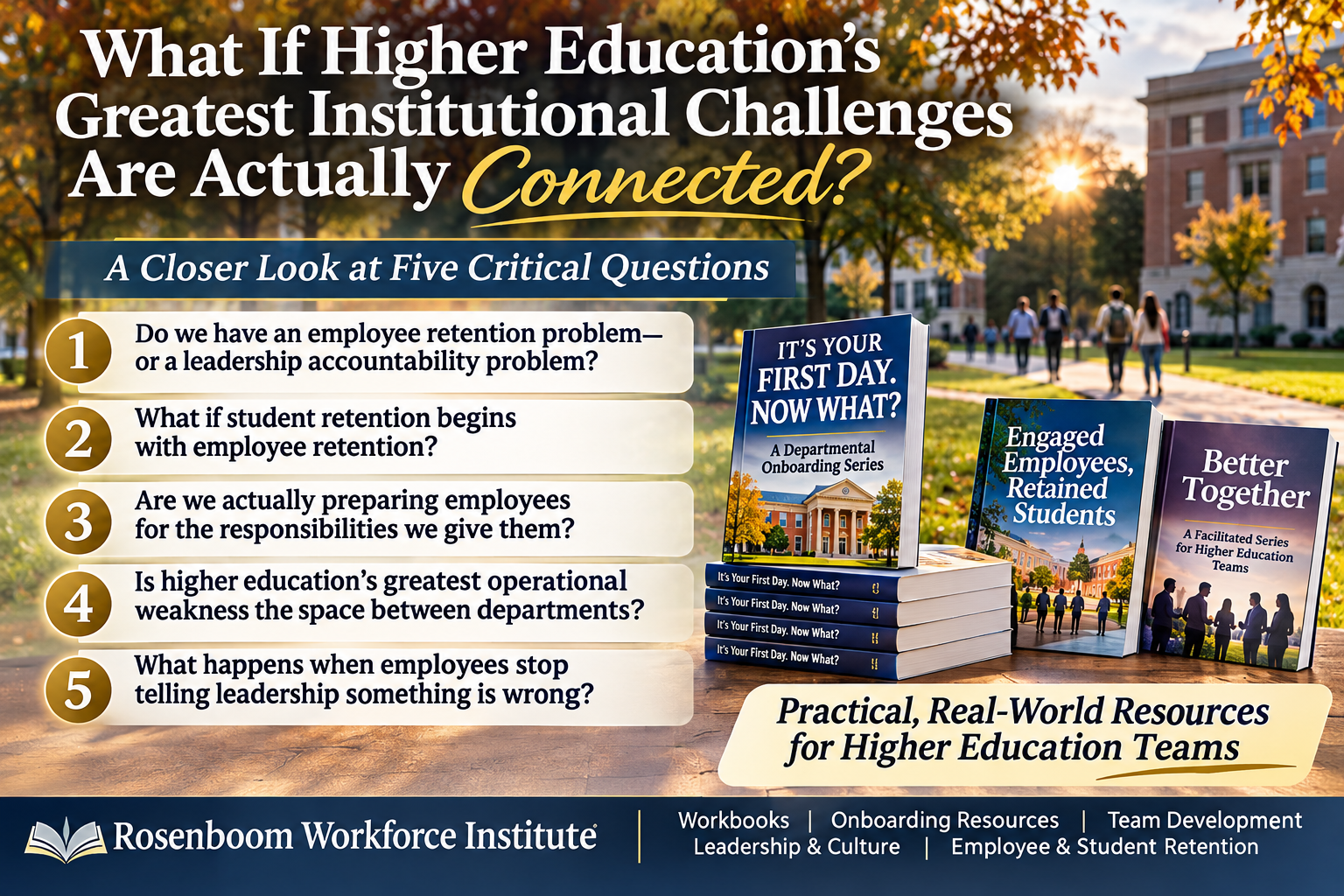
What If Higher Education's Greatest Institutional Challenges Are Actually Connected?
Higher education faces growing challenges involving employee retention, student success, leadership accountability, onboarding, and cross-departmental collaboration. But what if these aren't five separate problems? What if they are connected by something institutions have consistently underestimated—the employee experience? In this article, I explore five questions higher education leaders should be asking and why strengthening the people who serve students may be one of our most important opportunities for institutional improvement.
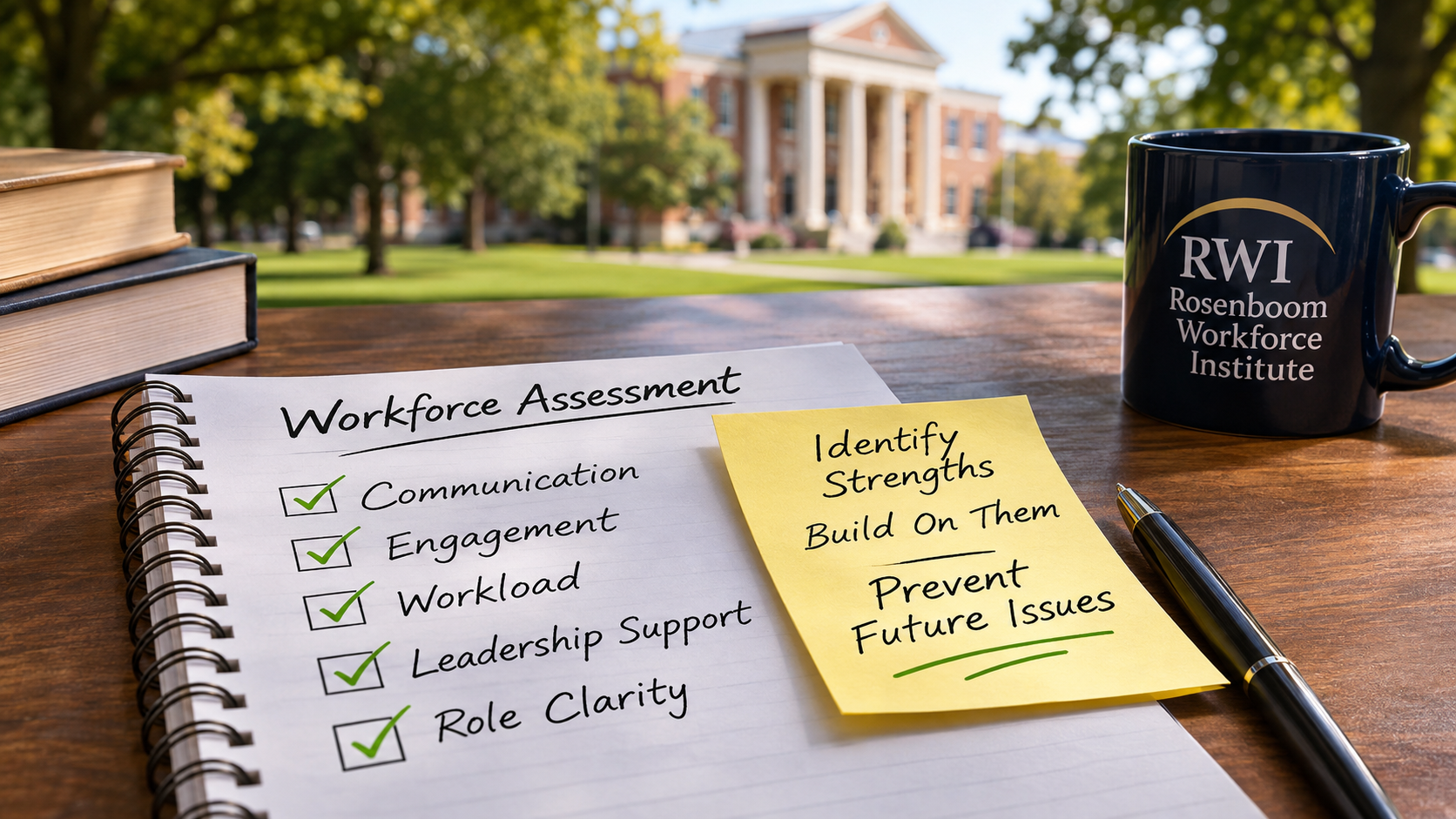
What If Your Workforce Assessment Finds You're Doing Things Right? Why workforce assessments should identify institutional strengths just as readily as they identify areas requiring improvement
What if a workforce assessment reveals that your institution is doing things right? Assessments should do more than identify problems. They can document institutional strengths, reveal effective communication practices, and help leadership prevent workforce challenges before they become staffing crises. Rosenboom Workforce Institute examines why understanding and supporting existing employees should come before relying on temporary staffing or reactive consulting solutions.
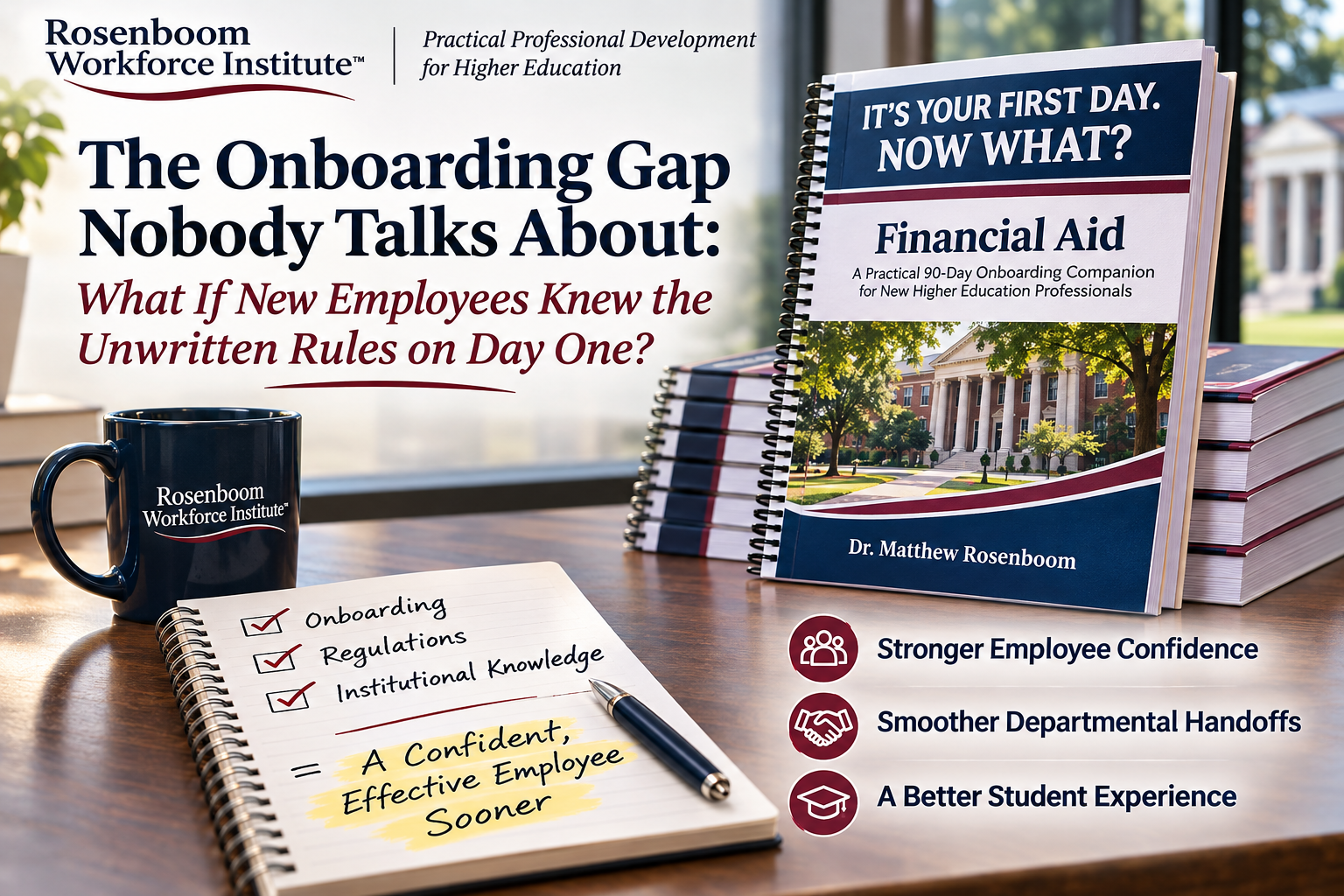
The Onboarding Gap Nobody Talks About: What If New Employees Knew the Unwritten Rules on Day One?
What if the biggest gap in employee onboarding isn't training or regulatory knowledge, but everything employees aren't taught? Explore how unwritten processes, missed departmental handoffs, and institutional knowledge gaps can delay employee effectiveness, increase operational costs, and affect student retention. Discover how the It's Your First Day. Now What? workbook series helps bridge those gaps through practical, department-specific professional development.
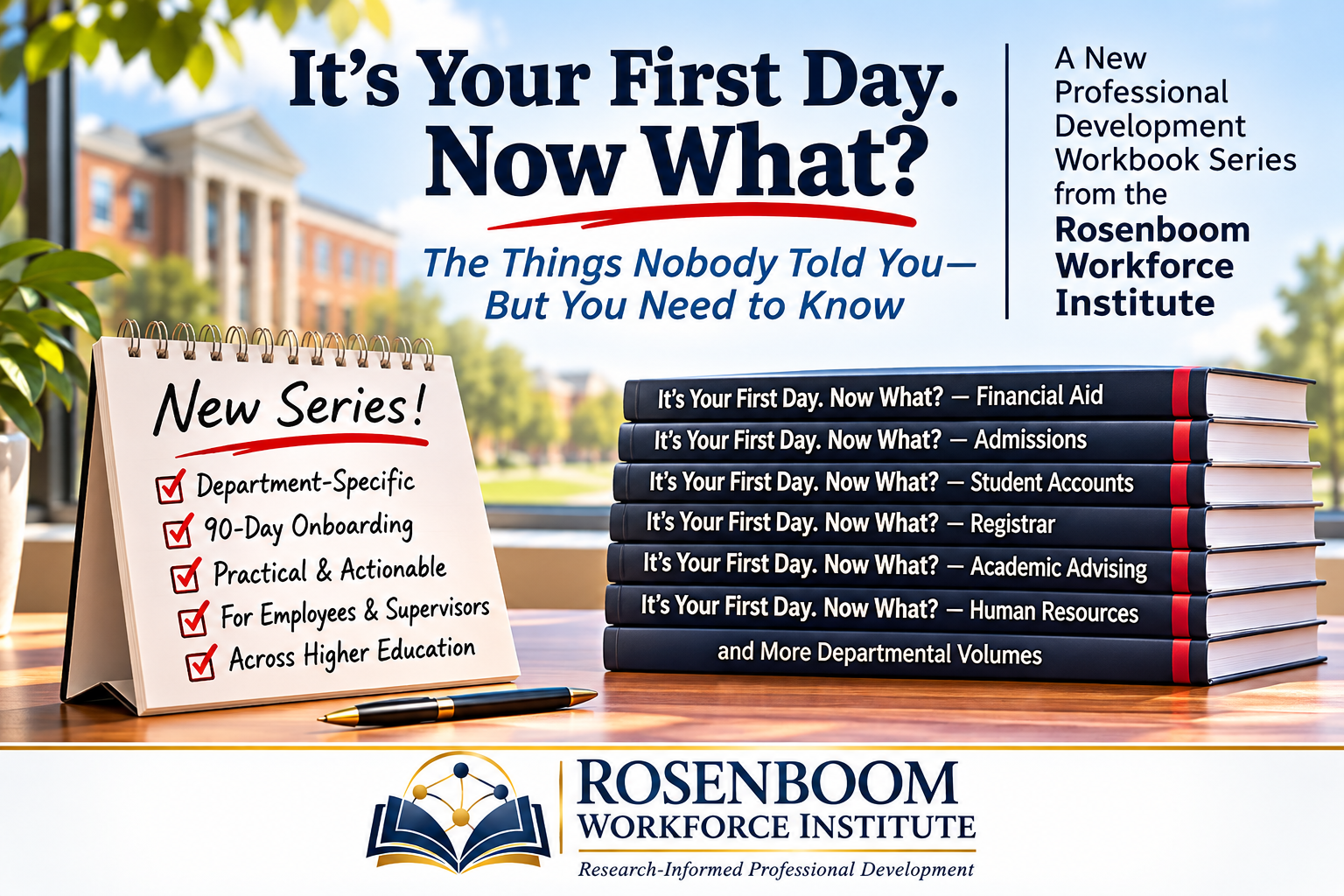
It's Your First Day. Now What? The Things Nobody Told You—But You Need to Know
What do you wish someone had told you on your first day working in higher education?
Introducing It's Your First Day. Now What?, a new Rosenboom Workforce Institute professional development series designed to help employees and supervisors navigate the first 90 days in their departments.
From Financial Aid and Admissions to Registrar, Student Accounts, Human Resources, and beyond, each workbook explores the practical knowledge, workplace relationships, and everyday challenges that formal training doesn't always address.
The things nobody told you—but you need to know.
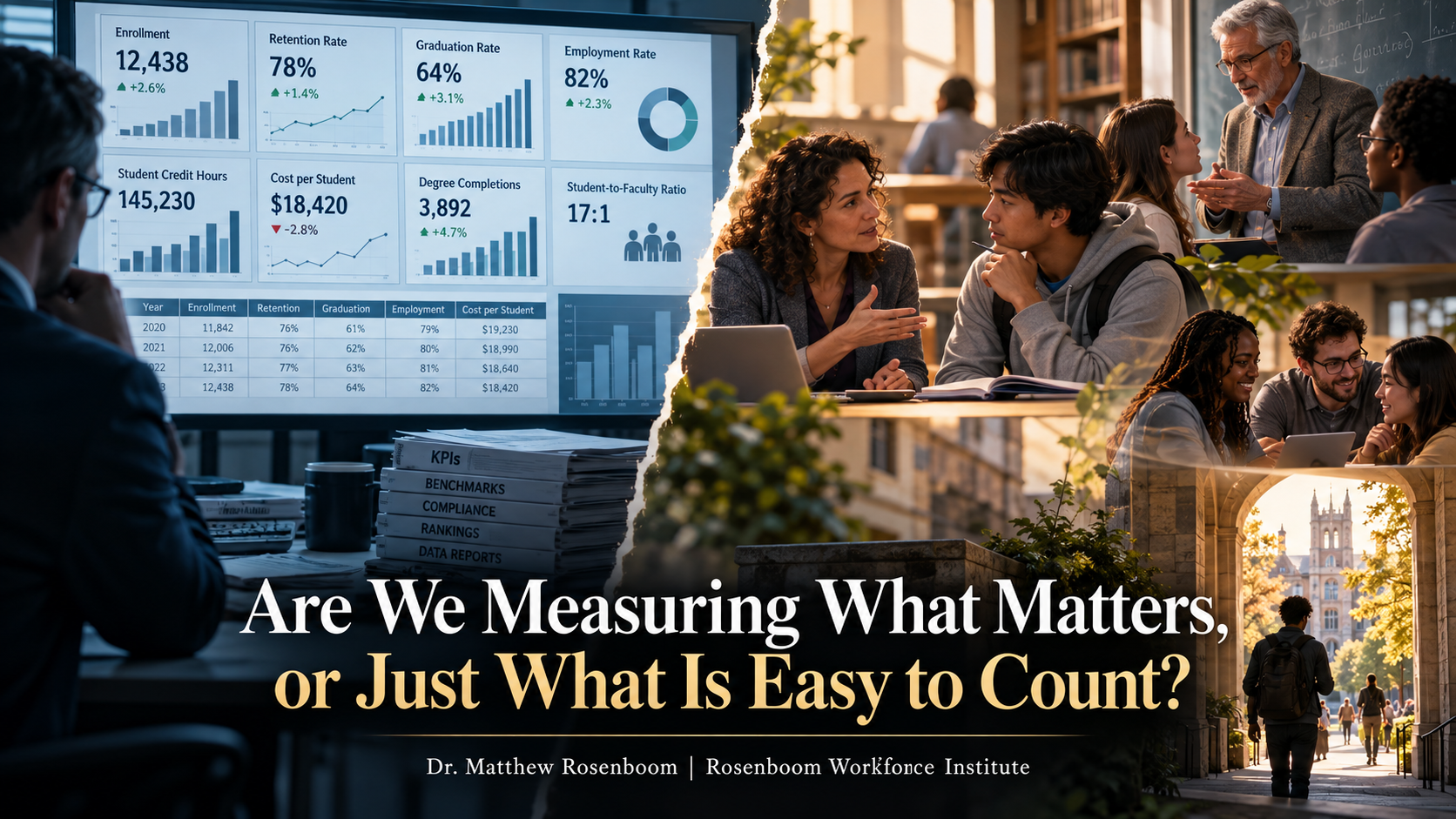
Are We Measuring What Matters, or Just What Is Easy to Count?
Higher education has become exceptionally good at counting things. But what if the metrics we celebrate are overlooking the employees, relationships, and decisions that actually make our institutions successful? A challenge to how we define value, reward performance, and measure what matters.
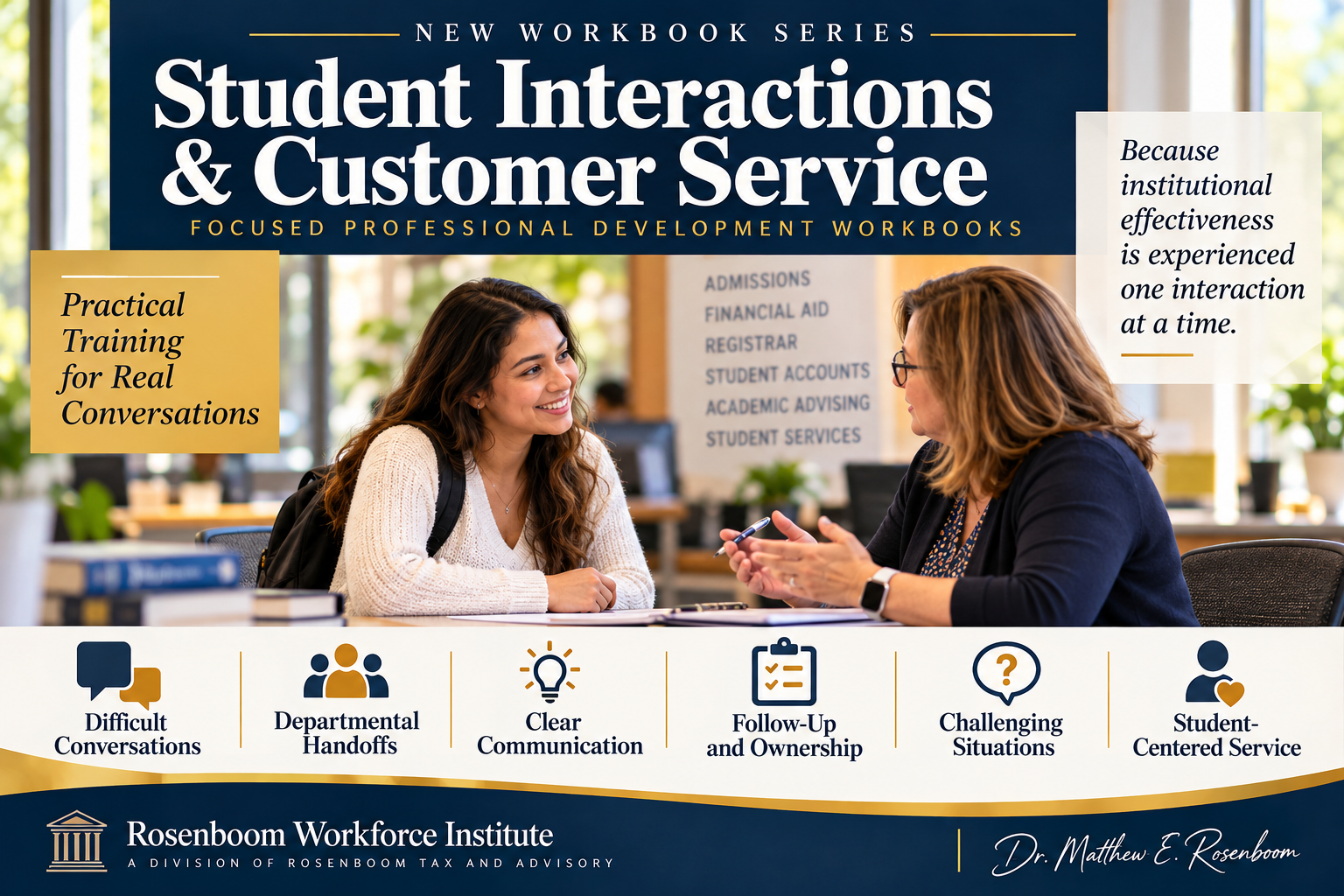
The Student Interaction Is Where Institutional Effectiveness Becomes Personal
Rosenboom Workforce Institute is introducing a new series of shorter, focused professional development workbooks addressing everyday student interactions in higher education. The first collection will explore eight practical challenges, including difficult conversations, departmental handoffs, explaining complex information, student follow-up, and effective communication. Discover how targeted training can strengthen employee confidence, improve student service, and support institutional effectiveness—one interaction at a time.
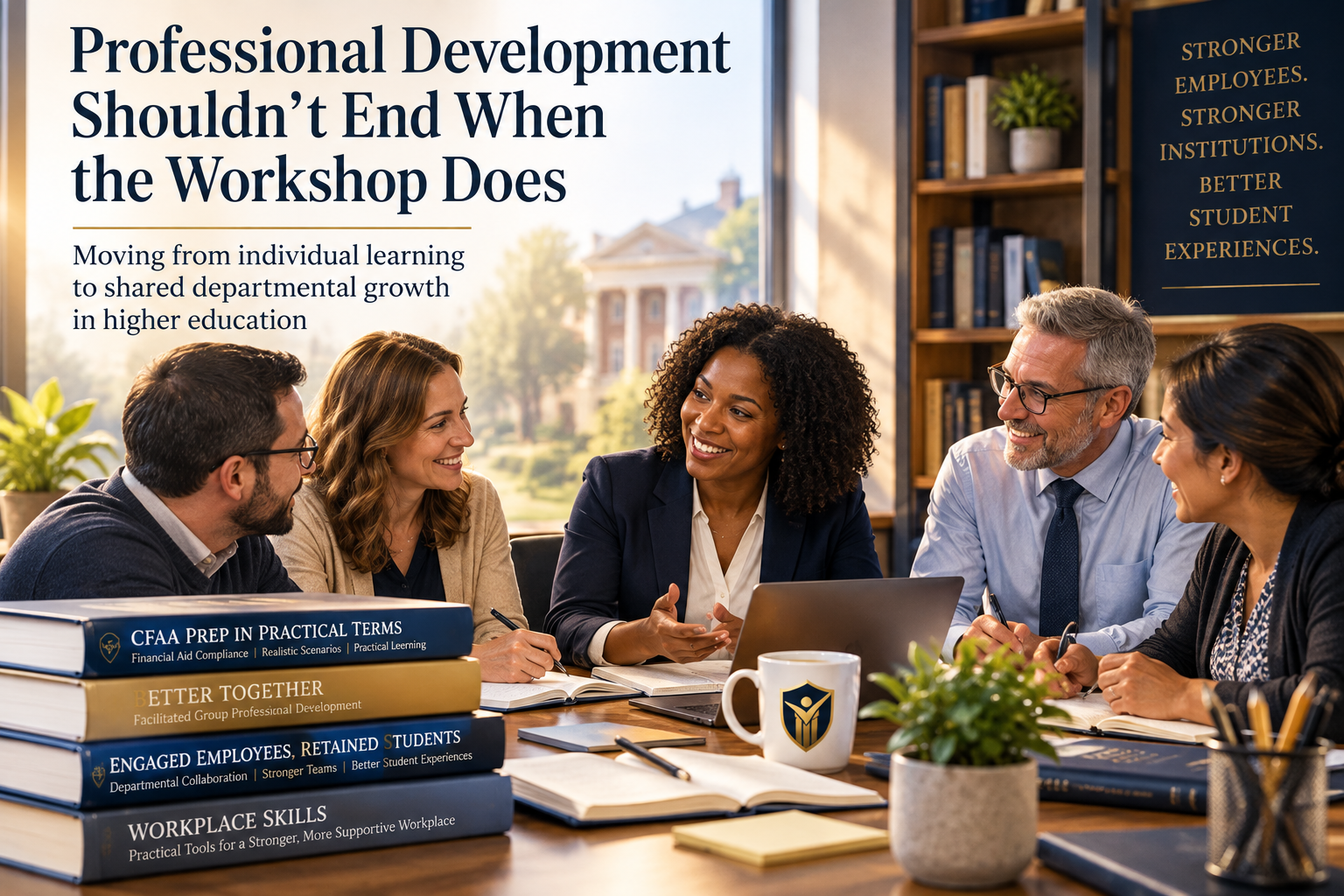
Professional Development Shouldn't End When the Workshop Does
Professional development shouldn't end when employees return from a conference, webinar, or workshop. The real opportunity begins when individual learning becomes shared departmental knowledge. Explore how higher education institutions can turn professional development into meaningful conversations, stronger employee engagement, improved collaboration, and better student experiences.
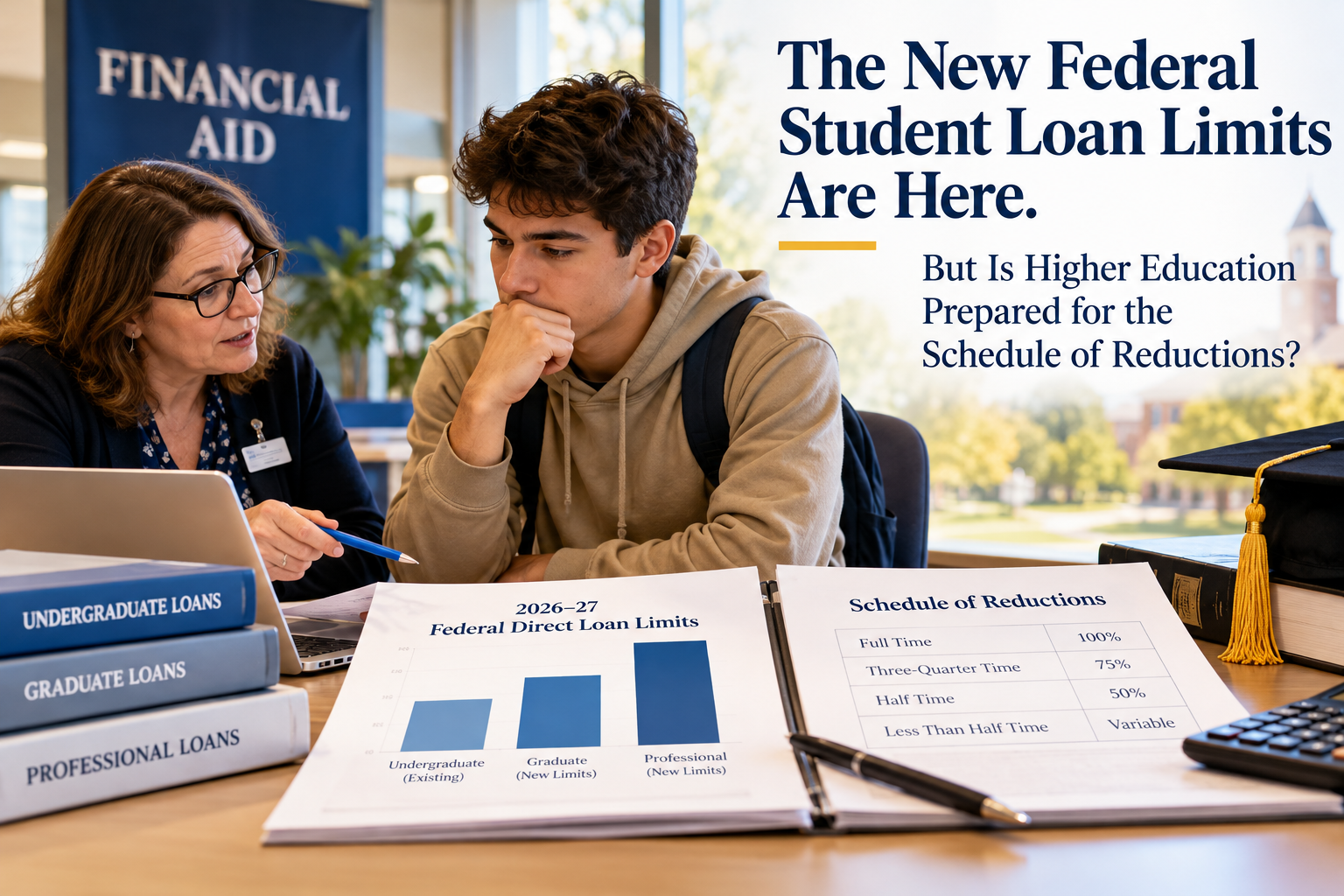
The New Federal Student Loan Limits Are Here. But is higher education prepared for the Schedule of Reductions?
New federal student loan limits and the Schedule of Reductions are changing how colleges administer financial aid beginning with the 2026–27 award year. Beyond the financial implications for students, these changes create important challenges involving employee training, departmental coordination, and institutional readiness. Are colleges preparing their employees as carefully as they are updating their systems?
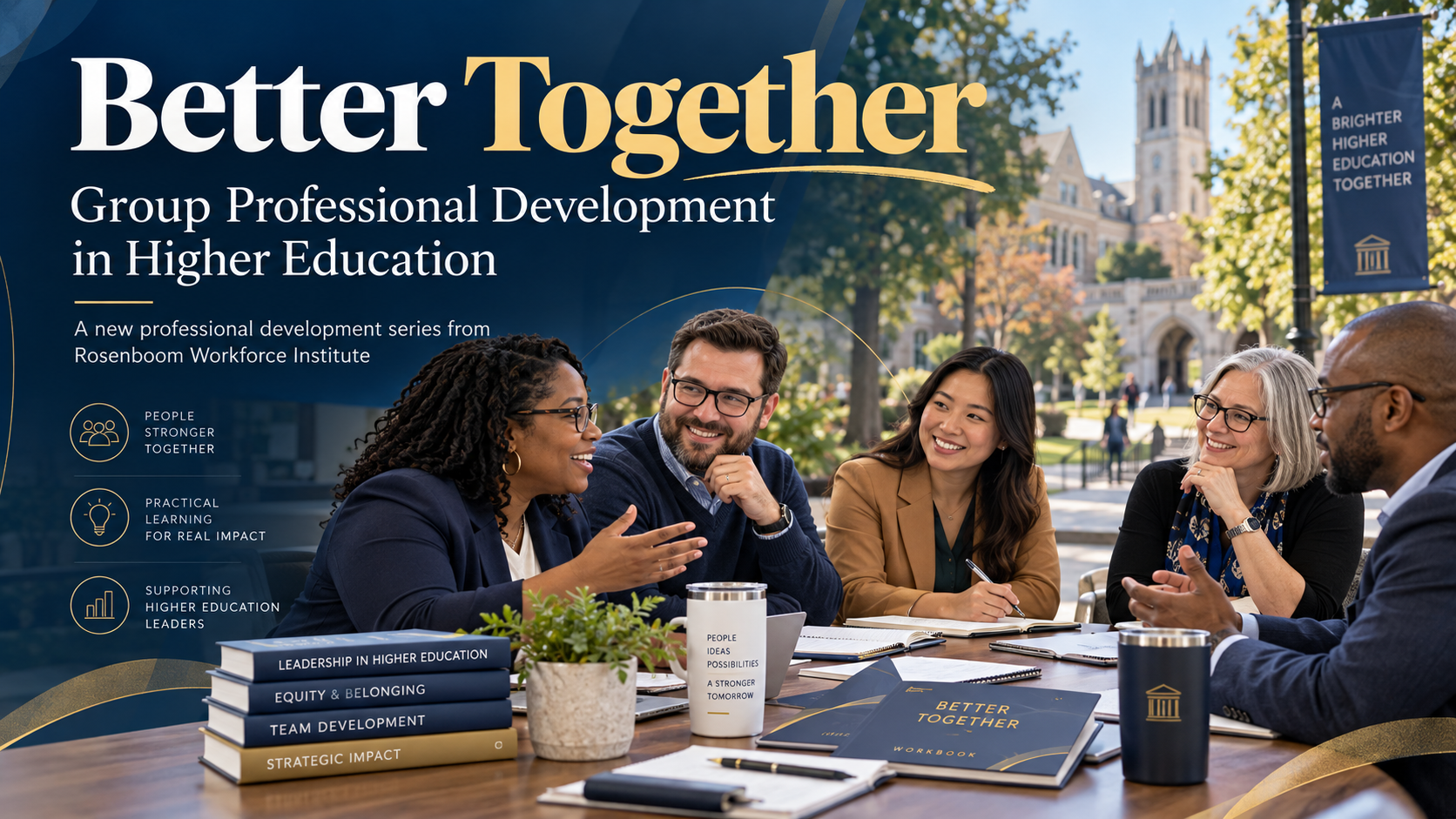
Better Together: A New Approach to Group Professional Development in Higher Education
What happens when professional development becomes something an entire department experiences together? Introducing Better Together, a new series from Rosenboom Workforce Institute designed to help higher education teams strengthen communication, collaboration, employee engagement, and everyday effectiveness through structured group learning, realistic scenarios, and practical activities.
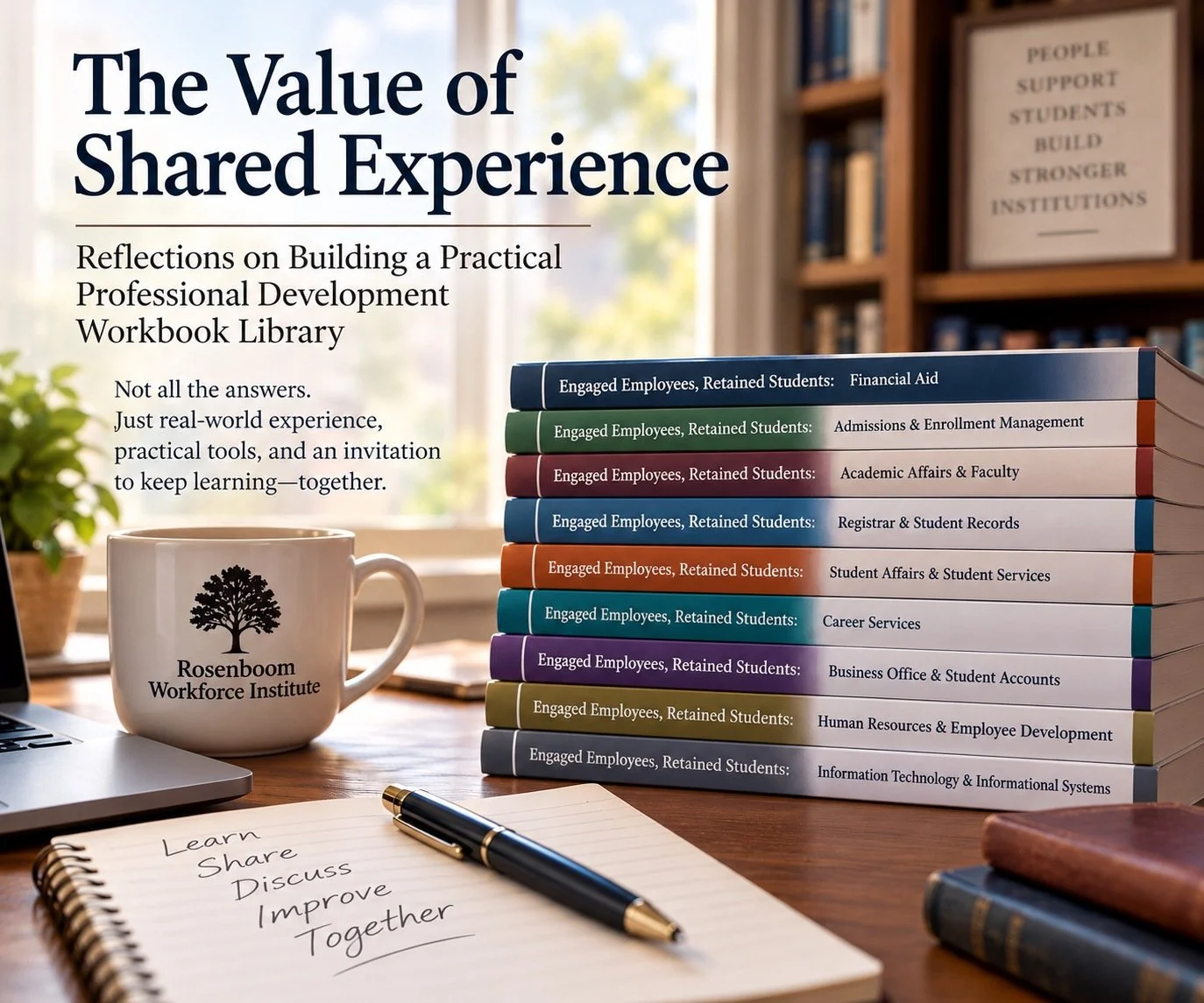
The Value of Shared Experience: Why I Am Building a Library of Practical Professional Development Workbooks
The Rosenboom Workforce Institute's growing professional development workbook library is built on a simple belief: no one has all the answers, and meaningful learning comes from sharing experiences and perspectives. Drawing on more than 25 years in higher education, Dr. Matthew Rosenboom reflects on the value of practical resources that encourage thoughtful discussion, collaboration, and continuous improvement. Each workbook offers an opportunity to learn from one another, build upon existing strengths, and discover approaches that support employees, institutions, and students.
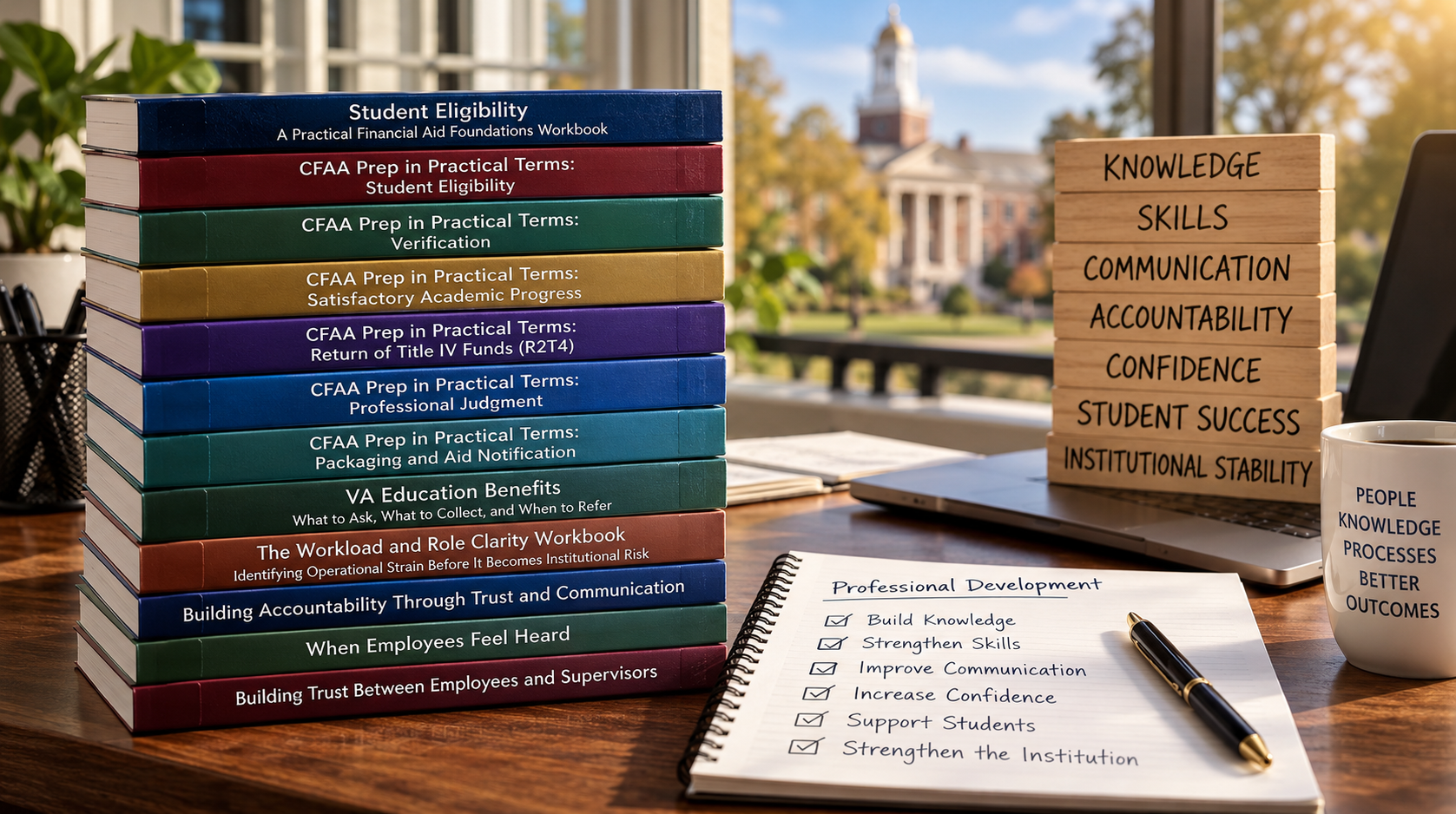
The Right Professional Development Resource for the Problem You're Actually Facing
Professional development in higher education requires more than regulatory knowledge. Explore how Rosenboom Workforce Institute's 28 published books and workbooks can help Financial Aid Advisors, directors, supervisors, and institutional leaders address compliance challenges, strengthen communication, improve workplace relationships, and support institutional effectiveness. Plus, a preview of an upcoming collection focused on essential professional and leadership skills.
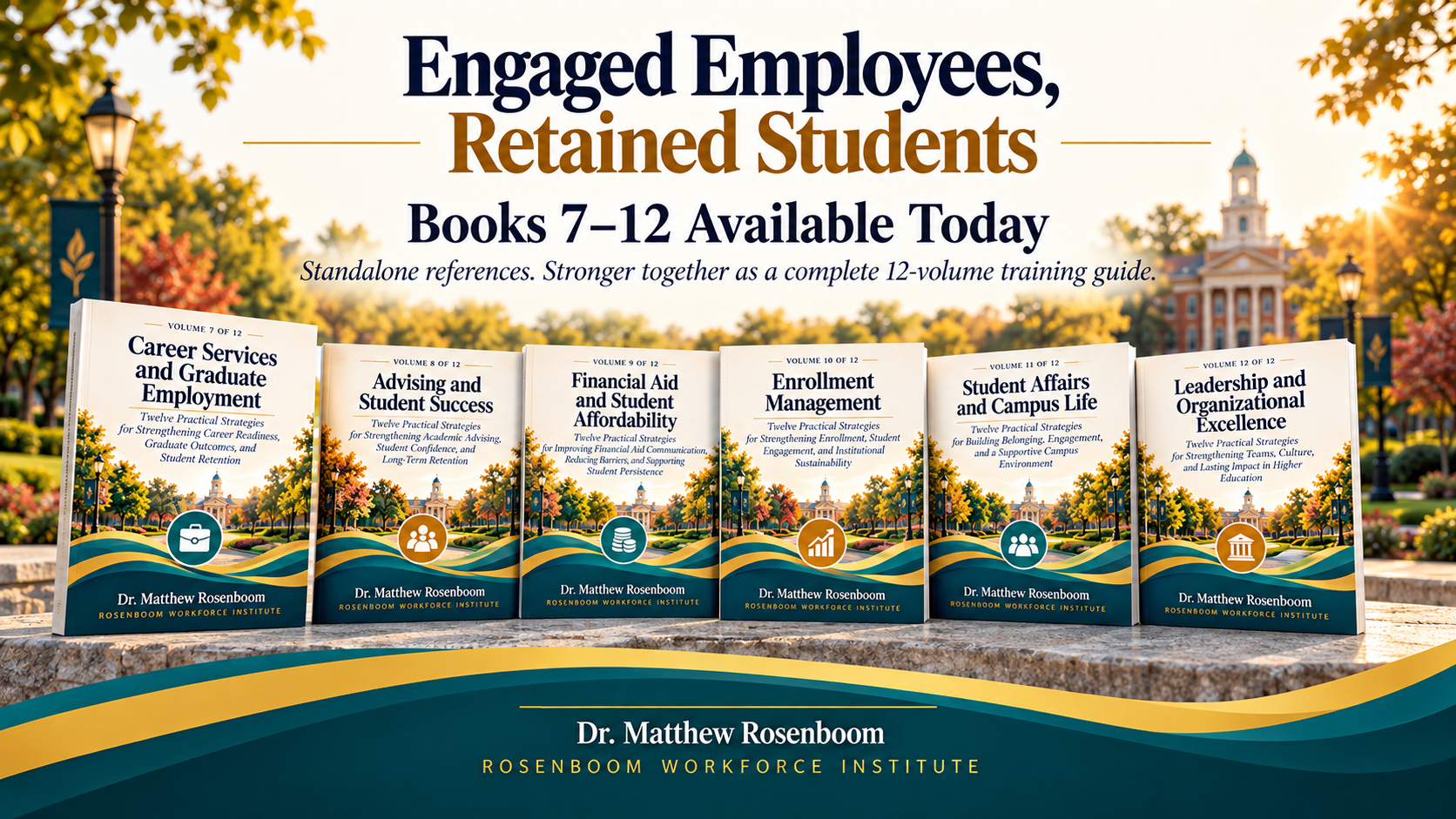
Engaged Employees, Retained Students: Building Stronger Institutions, One Department at a Time
The Rosenboom Workforce Institute is completing its 12-volume Engaged Employees, Retained Students professional development series, with Books 7–12 scheduled for release today, October 21, 2026. Each workbook provides practical scenarios, exercises, and strategies to strengthen employee engagement, institutional collaboration, and student retention. While each volume can serve as a standalone departmental reference, the complete collection is designed to function as a comprehensive institutional training and reference guide. Discover how supporting employees across every department can contribute to stronger student experiences and lasting institutional improvement.

When Interim Financial Aid Leadership Becomes the Control When Leadership Leaves, Compliance Risk Does Not Pause
Interim Financial Aid leadership is not just vacancy coverage. When an institution is facing leadership disruption, compliance pressure, staff uncertainty, documentation gaps, or unclear decision authority, interim leadership can become a critical internal control. This article explains when a Financial Aid leadership vacancy becomes a control gap and why institutions must stabilize risk before operational drift becomes a compliance, student service, or institutional credibility issue.

The First 30 Days After Financial Aid Leadership Changes Are the Most Dangerous
The first 30 days after a Financial Aid leadership change can be the most dangerous period operationally. When decision authority is unclear, institutional memory is undocumented, and staff lack direction, compliance risk can grow quickly. This article explains why institutions need a stabilization plan immediately after leadership disruption, including ownership clarity, deadline monitoring, documentation review, staff support, cross-department communication, and executive visibility before operational drift becomes a compliance problem.